














The bigger picture: machinery failure is shipping’s number one risk
This vessel’s challenge is far from unusual. The numbers show how widespread it is:
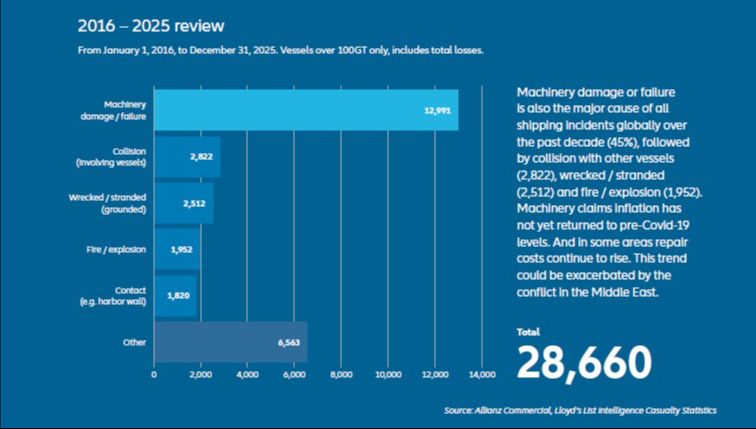
- Machinery failure is the leading cause of shipping incidents. In its Safety and Shipping Review 2026, Allianz Commercial reports that of 2,818 reported incidents on vessels over 100GT in 2025, machinery damage or failure accounted for 1,505, or 53 per cent. Over the past decade, it has caused 12,991 incidents out of a global total of 28,660, or 45 per cent. (Source: gcaptaingcaptain , Safety and Shipping Review 2026)
- Repairs are getting more expensive. Allianz notes that machinery claims inflation has not yet returned to pre-Covid levels, with repair costs continuing to rise. (Source: allianz)
- Ageing fleets add pressure. The average age of the global fleet reached 23 years in 2025, and vessels over 20 years old account for over half of all safety incidents
The wider industrial picture is just as stark. Siemens’ True Cost of Downtime 2024 report found that unscheduled downtime drains 11 percent of annual revenues from the world’s 500 biggest companies, a total of $1.4 trillion. And in ABB’s Value of Reliability survey of more than 3,200 plant maintenance leaders, two-thirds of companies dealt with unplanned downtime at least once a month, at a cost of $125,000 an hour.(Source: ismworldismworld )
The same logic applies to offshore wind farms, remote mines, and isolated process plants. The further an asset is from help, the more expensive every surprise becomes.
To safeguard fleet availability and protect charter revenue, leading offshore service suppliers are turning away from reactive repairs and traditional scheduled maintenance, embracing advanced, cloud-connected condition monitoring.


Why Standard ISO Thresholds Aren’t Enough
During routine measurements in August 2025, Accurex Machinery Diagnosis identified an early-stage drive end (DE) bearing defect on the Jastram port thruster. The standard ISO vibration indicators were still well below alarm limits. By conventional thresholds, the machine looked healthy.Under legacy maintenance protocols, this thruster would have been marked green and cleared for operation.
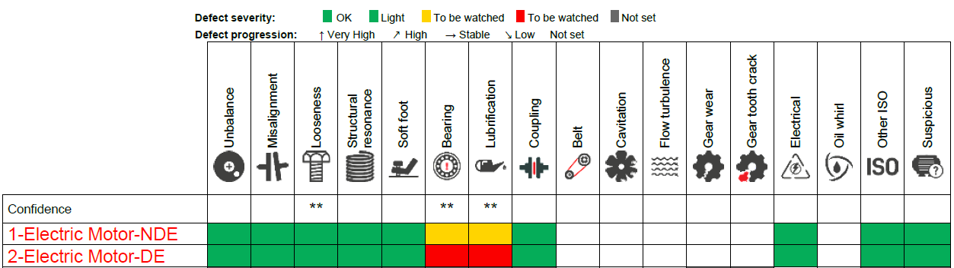
Accurex Diagnosis, supported by SFx ShockFinder, detected abnormal low-energy, high-frequency shock impacts, the early signature of a bearing beginning to fail. These early-stage signals signaled a Drive End (DE) bearing defect inside the thruster—long before the damage escalated into measurable overall vibration or mechanical failure.
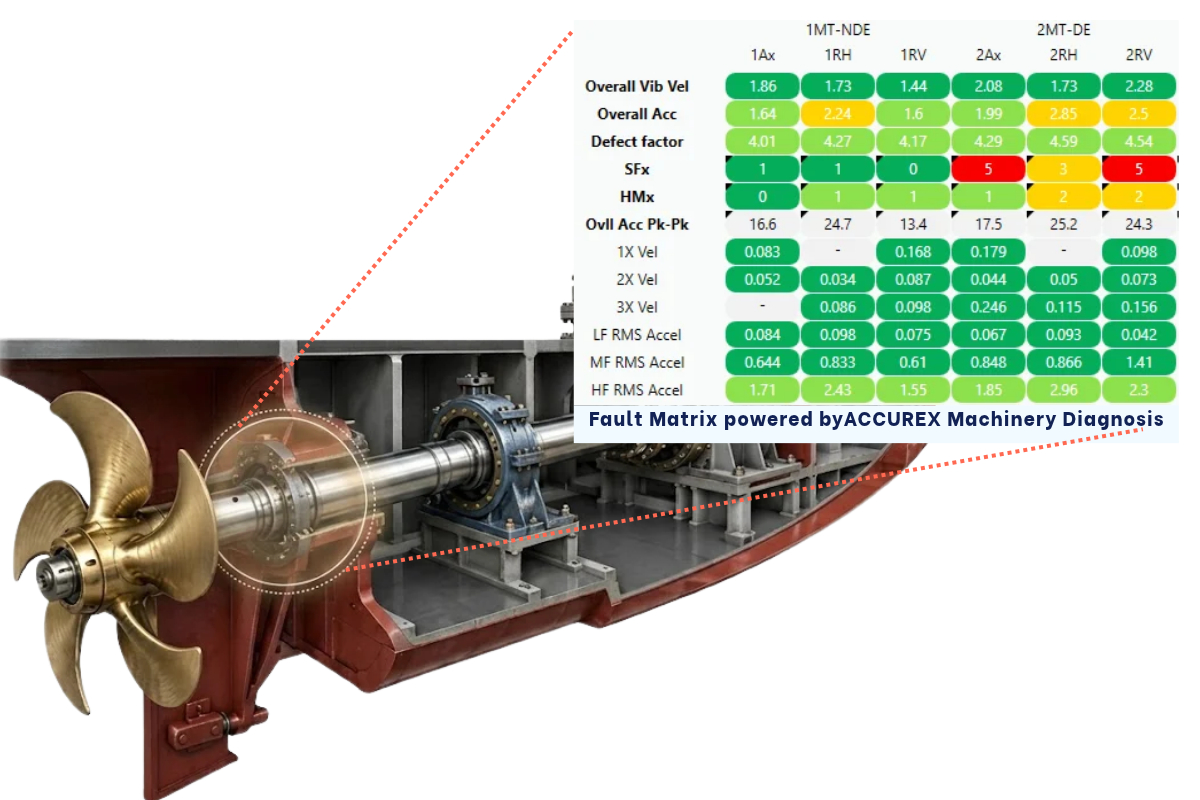
Overall vibration levels typically rise only after damage has progressed, which is why threshold-based alarms often raise the flag too late.
“Within limits” is not the same as “healthy.” Alarm limits tell you when it is late. Early detection tells you when it is time.
Key Takeaway for Fleet Managers: Standard ISO vibration limits measure overall energy, which often masks micro-cracks and early bearing fatigue. Advanced shock-impact analysis isolates these low-energy anomalies months before catastrophic breakdown occurs.