













Australia’s Water Challenge Is Unique
Australia is one of the driest inhabited continents on earth. Its water systems, rivers, aquifers, and coastal environments are under constant pressure from climate variability, population growth and industrial activity. And increasingly, the organisations operating in and around those water systems are being held to a higher standard of accountability.
Environmental licences are stricter. Reporting obligations are more detailed. Community expectations around water stewardship have never been more demanding.
For industries like mining, manufacturing and infrastructure (where operations can directly affect groundwater and surface water systems), monitoring has shifted from a compliance exercise to something more fundamental. It’s evidence. It’s the difference between demonstrating responsible management and simply asserting it.
That’s the environment Acoem’s water monitoring solutions are built for.
What ‘Water Monitoring’ Actually Looks Like on the Ground
Ask most people what water monitoring involves and they’ll picture someone dipping a probe into a river. The reality, at least at the scale Acoem operates, is considerably more complex.
Groundwater: The Hidden Picture
Groundwater monitoring is, in many ways, the most technically demanding part of what we do. You’re working with water you can’t see, tracking changes in aquifer systems that move slowly and reveal their story over months and years, not days.
Acoem supports large-scale bore network programs where hundreds of monitoring points are sampled on a structured schedule, using both low-flow and high-flow groundwater sampling techniques to collect representative samples without disturbing the aquifer unnecessarily. Downhole logging gives a profile of conditions at different depths. Long-term trend data reveals whether things are stable, improving or changing in ways that need attention.
The WA mining program mentioned above is one of our largest, but the principles are the same whether the program covers five bores or 1,500. Good groundwater monitoring is disciplined, consistent and traceable, and the data it generates is only as useful as the quality assurance behind it.
Surface Water: What the River Tells You
Rivers, streams, discharge channels and stormwater systems all carry information about what’s happening on and around a site. Surface water monitoring reads that information, measuring parameters like pH, turbidity, conductivity, dissolved oxygen and nutrients to understand how operations are interacting with the waterways downstream.
It’s inherently dynamic work. A rainfall event can change a surface water result dramatically in a matter of hours, which is why smart monitoring programs combine scheduled field sampling with real-time data from automated stations.
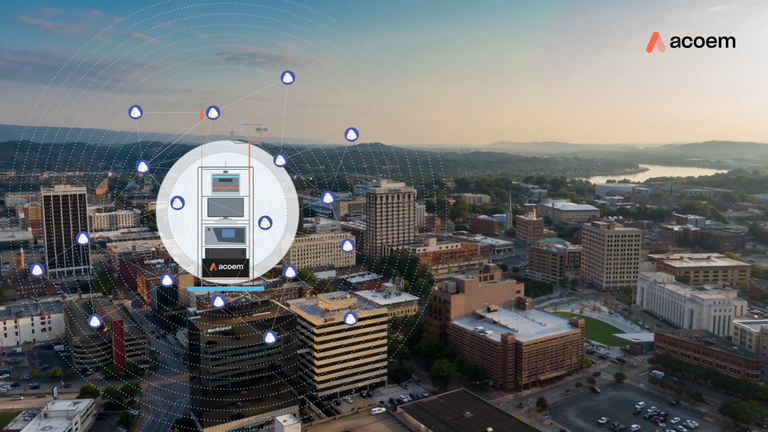
Acoem’s real-time water monitoring stations sit in rivers, beside discharge points and within stormwater systems across Australia. Solar-powered, telemetry-connected, measuring continuously and alerting operators when results approach a threshold. In Queensland, we’ve deployed these systems to support operations where regulators require verified water-quality evidence before discharge is permitted. The station provides that evidence, automatically, around the clock.
Coastal and Marine: The Downstream Story
Some of the most sensitive monitoring work we do sits at the intersection of industrial operations and coastal environments. Coastal operations face additional scrutiny from regulators, and for good reason. The potential for contamination pathways between industrial sites and marine ecosystems is real and requires careful, ongoing surveillance.
Acoem supports marine sampling programs, shoreline bore monitoring and synchronised coastal-groundwater sampling to help organisations understand those pathways and demonstrate that they’re being managed. It’s monitoring that requires coordination, sampling marine and groundwater systems simultaneously to capture the relationship between them. And it’s the kind of nuanced program that benefits from an experienced field team who’ve done it before.
Potable Water: When It’s Personal
Not all water monitoring happens at the scale of a mining pit or a river system. For remote industrial sites and the communities around them, monitoring drinking water quality is simply the right thing to do.
Acoem supports potable water monitoring programs for industrial facilities, remote communities and infrastructure projects. We ensure water systems meet NHMRC guidelines and giving both operators and the people who depend on that water confidence that quality is being maintained.

The Technology That Makes It Possible
Good monitoring programs need reliable instruments. Acoem designs and manufactures much of the technology it deploys, which is a less common position than you might think in this industry.
Our Greenspan sensor range (multi-parameter sondes capable of measuring up to six water quality parameters simultaneously) underpins most of our in-situ monitoring programs. They’re built for long-term unattended deployment in bore conditions, open water, and surface systems, and are designed to keep servicing requirements to a minimum, even in remote environments.
Our MAXX automatic sampler range handles collection when conditions mean you can’t have someone on site for every event. That includes the Desert First Flush Sampler. A self-contained, battery-powered unit that can be installed in a remote catchment, left dormant for months, and automatically triggered to collect a sample when a rainfall event occurs. No power infrastructure, no ongoing attendance, no missed samples.
And when data needs to be managed across a program spanning hundreds of monitoring points, Acoem’s Environmental Water Monitoring System (EWMS) brings it together – scheduling sampling events, managing chain-of-custody documentation, storing complete sample histories and providing the traceability that makes that data defensible in an audit.
The best water monitoring programs don’t just collect data. They make it possible for organisations to understand what’s actually happening — and to show that they understand it.
Accreditation Matters — Here’s Why
In Australia, environmental water monitoring data used for regulatory purposes needs to meet a specific quality standard. NATA accreditation, issued by the National Association of Testing Authorities, is the benchmark that indicates a laboratory or sampling service has been independently assessed against ISO/IEC 17025 requirements.
Acoem operates a NATA-accredited water quality laboratory and conducts field sampling using accredited procedures. Every sample we collect follows a strict chain-of-custody process from the moment it’s taken in the field to the moment a certified report is issued. That’s not just good practice, it’s what makes the data legally defensible.
For organisations whose monitoring programs feed directly into regulatory reporting, community stakeholder communications or environmental audits, that level of rigour isn’t optional. It’s the foundation everything else rests on.
What Good Water Monitoring Achieves
It’s worth stepping back occasionally to ask: what does all of this actually accomplish?
At the compliance level, effective water monitoring enables an operation to demonstrate, with evidence rather than assertion, that it is meeting its environmental obligations. That evidence is what regulators need, what communities deserve and what good environmental governance looks like in practice.
But beyond compliance, good monitoring programs do more. They build a body of knowledge about how water behaves in and around a site over time. They reveal changes early. Before they become problems. They inform decisions about how operations are managed, where infrastructure is placed, when to act and when to hold course.
In a country where water is as precious and contested as it is in Australia, that kind of knowledge matters.
On World Water Day
World Water Day is observed on 22 March each year. The 2026 theme from the United Nations focuses on the relationship between water and peace, recognising that water scarcity and water quality are not just environmental issues but drivers of broader social and political stability.
In Australia’s context, that connection is most evident in the relationship among industry, community and environment. When a mining operation can demonstrate (with verified data) that it is not harming the water resources its neighbouring communities depend on, that’s not just regulatory compliance. It’s the foundation of a genuinely sustainable relationship between industry and place.
That’s what Acoem’s water monitoring programs are ultimately about. Not just meeting licence conditions. Not just producing reports. But contributing to a real, evidence-based understanding of how Australia’s water resources are being managed, and being part of making that management better.
Talk to Our Team
Whether you’re building a new groundwater monitoring program from scratch, adding real-time capability to an existing one, or working through what your licence conditions actually require, Acoem’s water monitoring specialists can help.
We work across mining, industrial, infrastructure and government sectors throughout Australia. We understand the regulatory frameworks, we know what auditors look for, and we’ve built programs that hold up under scrutiny.
Learn more about Acoem’s water monitoring solutions.
Download the Water Product Portfolio.
Connect with Acoem
Contact us to learn more about our air quality monitoring solutions.