










Modelling noise pollution in urban areas: the case of the Santiago Bernabéu Stadium
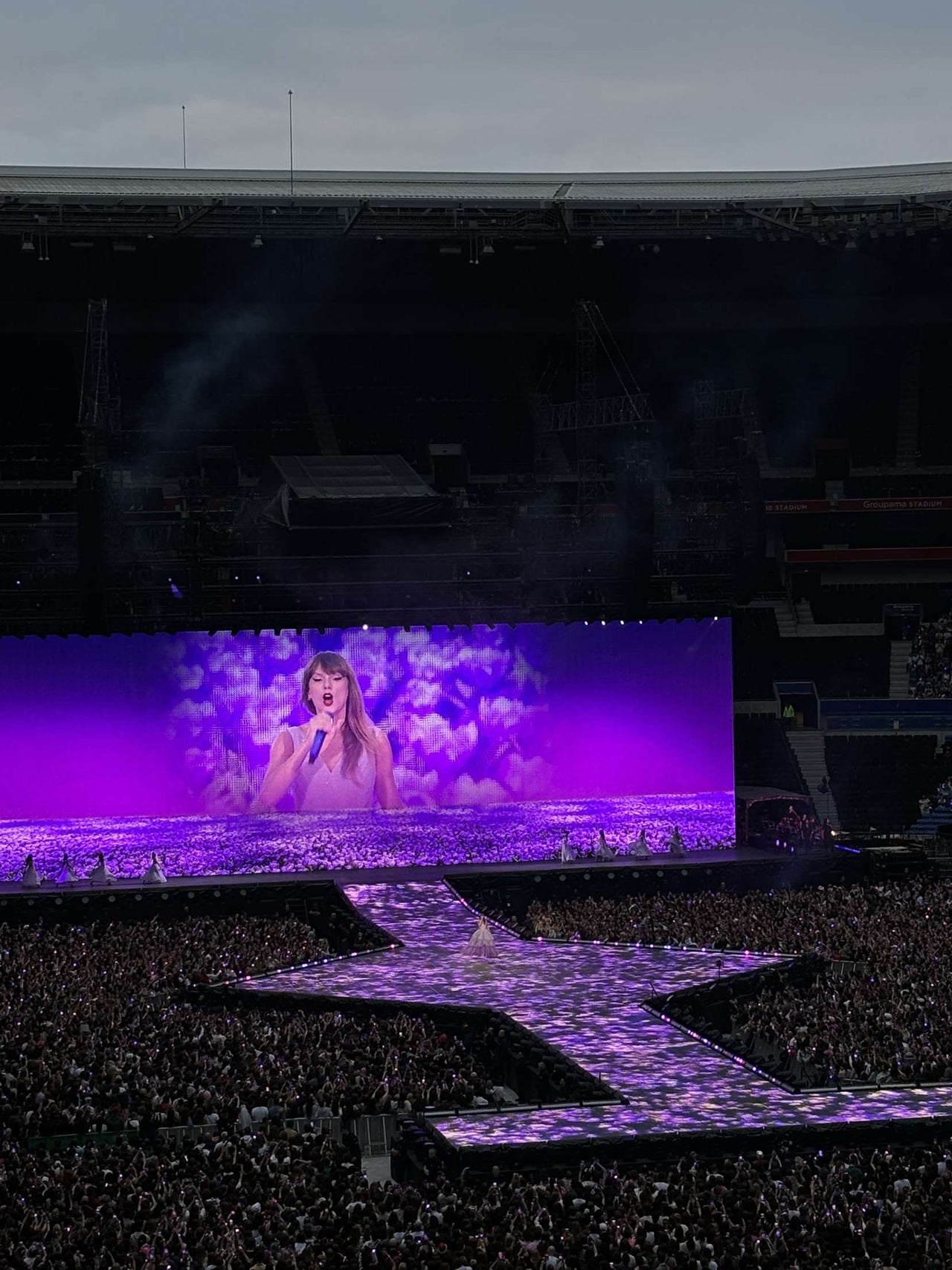
Organising large-scale events, such as concerts, in stadiums located in the heart of cities poses a major acoustic challenge. While these events contribute to cultural and economic vitality, they can also be a source of noise pollution for local residents. A recent study of the Santiago Bernabéu stadium in Madrid during Taylor Swift’s concert on May 28, 2024, perfectly illustrates how acoustic expertise, coupled with ACOEM’s measurement and simulation solutions, can be used to objectively assess a complex problem and design targeted solutions for better coexistence.

The context: concerts in a residential neighbourhood

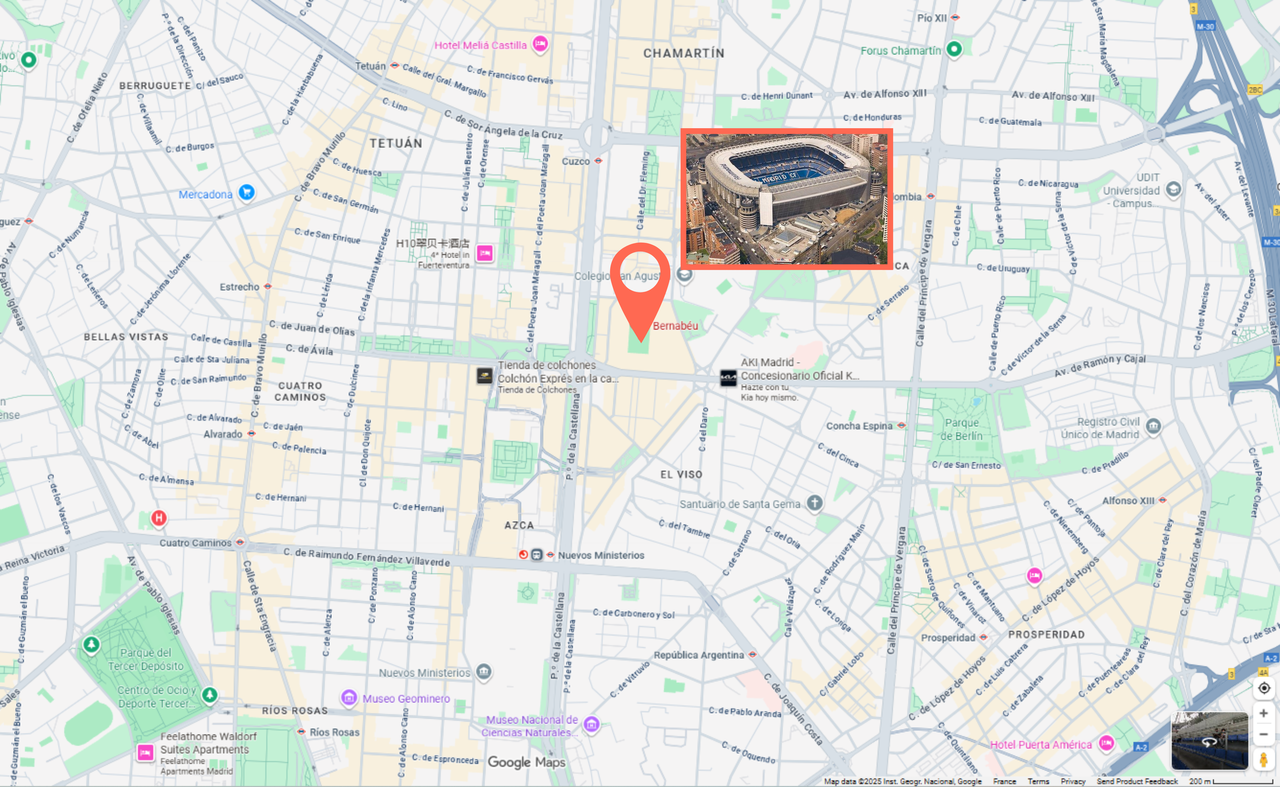
After extensive renovations, the famous Santiago Bernabéu stadium has diversified its activities to host around 15 major concerts in 2024, each attracting up to 65,000 spectators. Located in the predominantly residential neighbourhood of Chamartín, the stadium has become the centre of intense debate, with local residents complaining of significant noise pollution impacting their well-being.

In response to this issue, researchers from Rey Juan Carlos University and the IAG engineering firm conducted a study to assess the acoustic impact of these events and determine whether they complied with legally established noise levels.

A methodology combining field measurements and digital simulation during Taylor Swift’s concert

The study was based on a rigorous four-step methodology designed to compensate for the lack of precise data on the stadium’s structure or the sound systems used:

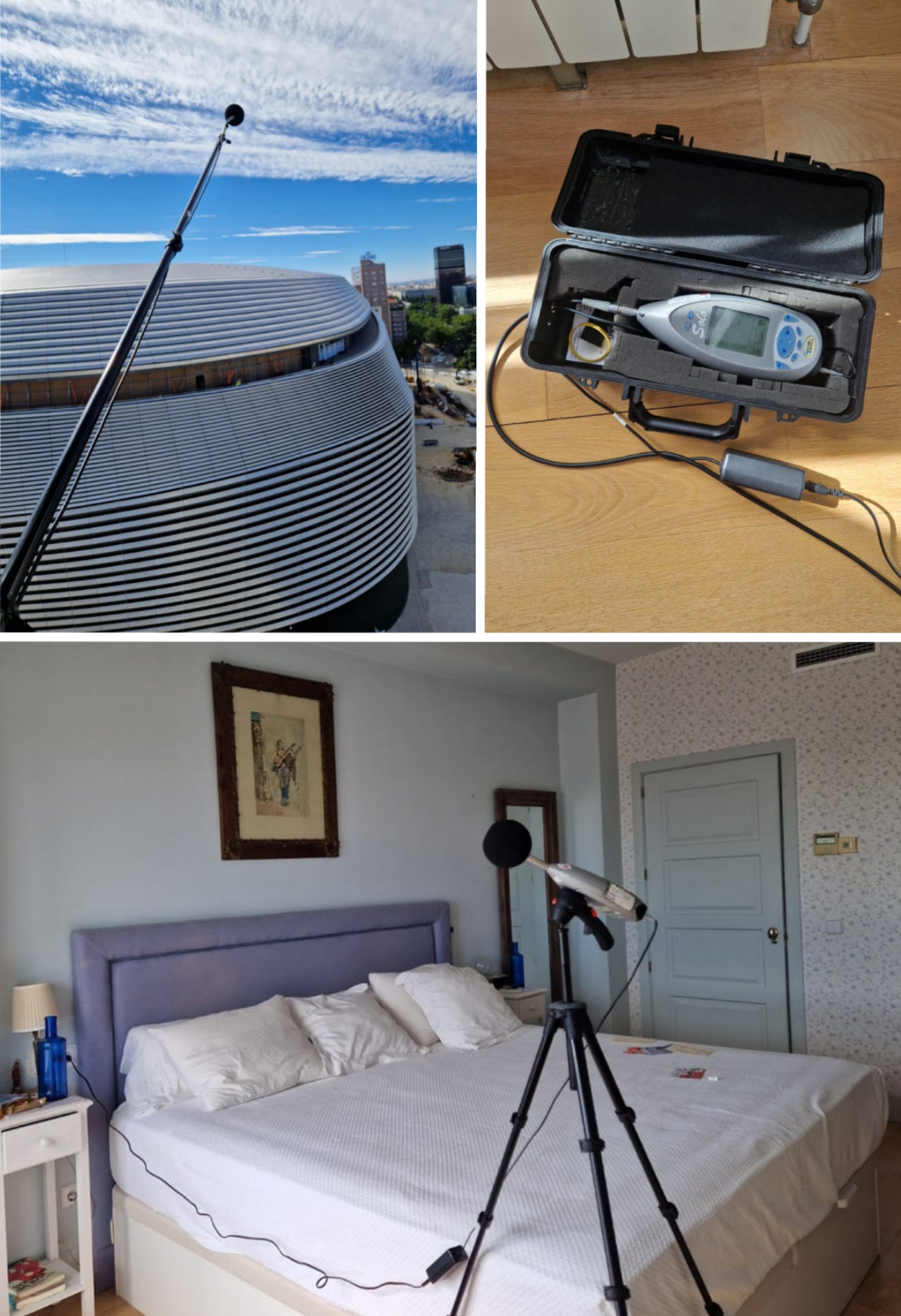
  • On-site measurements with the 01dB SOLO sound level meter Acoem: A series of measurements was carried out in the vicinity of the stadium. To do this, acousticians deployed the Class 1 01dB SOLO sound level meter in nearby hotel rooms. This instrument enabled reliable data to be captured in a complex urban environment. To ensure the quality of the measurements, the microphones were placed outside the buildings using telescopic poles, two metres from the facades to minimise sound reflections.
  • Acoustic modelling with CadnaA: The collected data was then used to build a predictive digital model using CadnaA, an environmental noise mapping software. CadnaA’s computing power and accuracy made it possible to simulate sound propagation in the neighbourhood with a high degree of accuracy, incorporating buildings and road traffic and modelling the stadium itself as a complex sound source (see video below).

  • Model validation: CadnaA model predictions were compared with actual measurements from the SOLO sound level meter. As the differences were less than 2 dBA, the model was deemed extremely reliable for assessing different scenarios.
  • Analysis and proposed solutions: The validated model was finally used as a decision-making tool to map the noise impact and virtually test the effectiveness of various corrective measures.

Results: Noise levels well above regulatory limits

The analysis revealed that the noise levels generated by the concerts greatly exceeded the regulatory limits set for residential areas.

  • Significant exceedance: At the measurement points, the recorded noise levels (LKAeq) exceeded the permitted limits by 23 to 31 dBA in the evening and by 33 to 41 dBA at night.
  • A large impact area: The noise maps generated by CadnaA show that regulatory thresholds are exceeded within a radius of at least 500 metres around the stadium in the evening and at distances greater than 1 kilometre at night.
  • A predominance of low frequencies: The sound spectrum showed that the problem was particularly concentrated in the low frequencies (63 Hz and 125 Hz octave bands), which can cause vibrations in buildings and increase the feeling of discomfort among residents.

Are you a local authority or event organiser facing sound management challenges?

Contact Acoem to find out how our environmental monitoring and noise surveillance solutions can help you.