












Why the gap matters more than it looks
Ammonia doesn’t stay put, and it doesn’t stay ammonia. Once airborne, it acts as the principal alkaline gas in the lower atmosphere, reacting with pollutants from transport and industry to form fine particulate matter — PM2.5.
This is where the blind spot becomes a public health issue, not just a data one. PM2.5 particles are small enough to bypass the body’s natural filters, penetrate deep into the lungs, and enter the bloodstream — with short-term effects ranging from respiratory irritation to serious cardiovascular events, and long-term exposure linked to permanent lung damage and premature death in vulnerable groups.
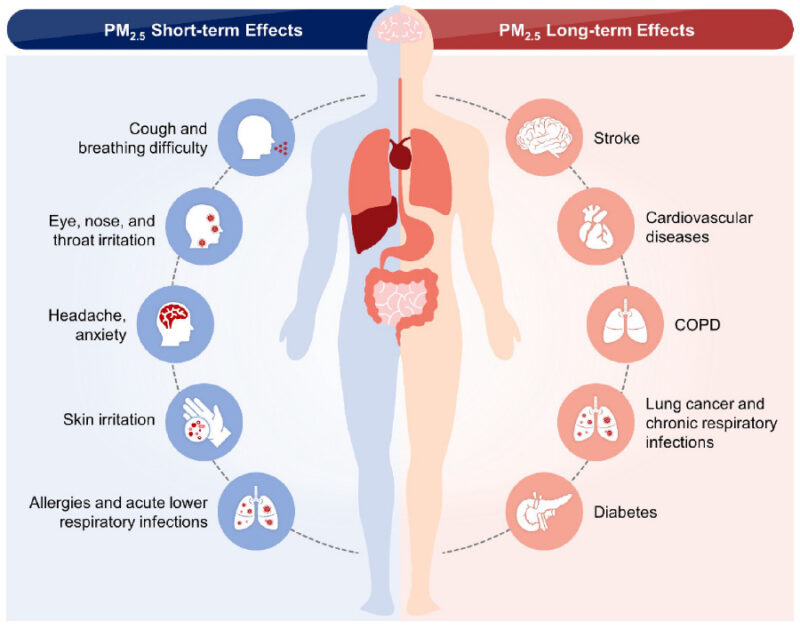
Track PM2.5 alone, and you’re watching the symptoms. The cause — ammonia, released miles away in agricultural areas with little to no monitoring — goes largely unaccounted for. Regional compliance models built on broad estimates routinely miscalculate how these rural emissions interact with urban air, understating the real scale of the problem.
The damage doesn’t stop at human health, either. Ammonia deposition drives soil acidification and eutrophication — stripping nutrients from soil, triggering oxygen-depleting algal blooms in waterways, and pushing out native vegetation in favour of aggressive nitrogen-loving weeds. It’s a slow, compounding cost to ecosystems that rarely makes the same headlines as a smog alert.
Closing the Gap Starts With Measurement
You can’t manage what you don’t measure — and right now, the UK is trying to manage ammonia’s downstream effects (PM2.5, soil damage, ecosystem stress) without solid data on the upstream source.
Real-time, high-resolution ammonia monitoring changes that equation. Rather than relying on regional inventories and seasonal assumptions, it gives regulators and operators three things they don’t currently have:
- Early warning — spotting downwind risk before it escalates into a smog event
- Seasonal precision — mapping exposure peaks tied to fertiliser application windows
- Policy accountability — a quantitative way to check whether mitigation efforts and low-emission techniques are actually working, rather than assuming they are.
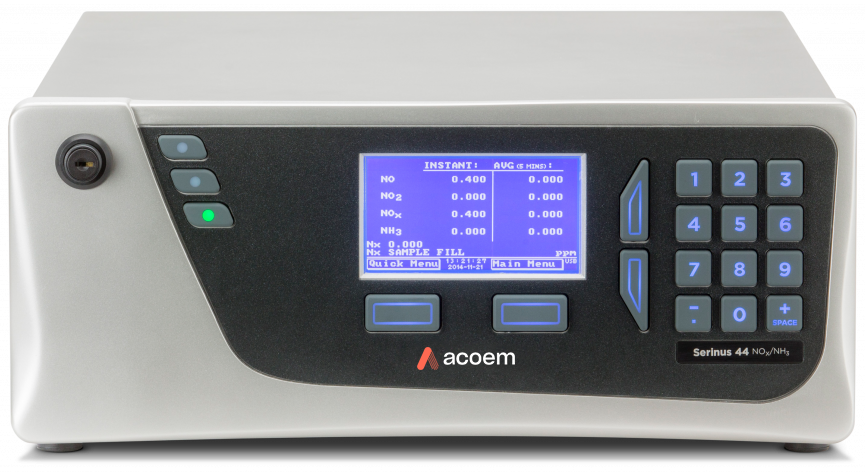
This is exactly the gap instruments like the Acoem Serinus 44 Ammonia Analyser are built to close. Using chemiluminescence with an external catalytic converter, it continuously quantifies NH3 down to below 0.4 ppb — while simultaneously tracking NO, NO2, and NOx from a single sample. That means regulators and site operators get a real picture of aerosol conversion kinetics as they happen, not a modelled approximation weeks later.
Measure the source, not just the symptom
The science linking ammonia to particulate formation, soil degradation, and ecological damage isn’t new or in dispute. What’s missing is the measurement infrastructure to match the scale of the problem — and until that changes, 89% of the UK’s ammonia burden will keep being managed by estimate rather than evidence.
Closing that gap doesn’t require guesswork. It requires putting sensors where the emissions actually are.